
Taliaferro County Arrest Records and Court Charges
Arrest records in Taliaferro County begin with the Sheriff's Office or another law-enforcement agency that takes a person into custody. The sheriff's official criminal-process material defines arrest as a deprivation of liberty by legal authority and describes booking as the post-arrest process where staff collect personal information, check criminal history, take fingerprints and photographs, search the person, collect property, and decide jail placement. That is not the same record as the filed criminal case. The custody side may show why a person was held, but the court side shows what charges were carried forward.
Court charges after arrest usually appear in warrant paperwork, preliminary-hearing records, accusations, indictments, arraignment entries, and criminal case files. In Taliaferro County, felony prosecution is tied to the Toombs Judicial Circuit District Attorney, while the Clerk of Superior Court is the practical starting point for Superior Court criminal case files. For jail custody details, use the Taliaferro County inmate records path. For pleas, motions, disposition, and sentencing, use the Taliaferro County criminal court records file.
The official Taliaferro County Sheriff's criminal process page is the local source for the arrest-to-case path. Its glossary is useful because it names the points where an arrest record, a warrant record, and a court charge record can diverge.
Where Taliaferro County Charges Appear
A charge may appear first as an alleged offense tied to a warrant or arrest. After that, it may show in a Magistrate Court preliminary hearing, a Superior Court criminal file, or a grand-jury indictment. Taliaferro County's official court listing places Superior, Juvenile, Probate, and Magistrate Court functions at the courthouse in Crawfordville, while Crawfordville Municipal Court is separate for city-level matters. The correct office depends on the stage of the case and the kind of charge.
| Access point | Charge record role | Contact |
|---|---|---|
| Magistrate Court | Warrants, probable-cause hearings, preliminary matters, and minor criminal items | 113 Monument Street, P.O. Box 264, Crawfordville, GA 30631; 706-456-2253 |
| Clerk of Superior Court | Filed felony case records, indictments, arraignment entries, orders, and final criminal case documents | 113 Monument Street, P.O. Box 182, Crawfordville, GA 30631; 706-456-2123 |
| Sheriff's Office | Arrest, booking, custody, warrant service, prisoner transport, and jail records | 758 Warrenton Road SE, P.O. Box 97, Crawfordville, GA 30631; 706-456-2345 |
| Municipal Court of Crawfordville | City ordinance, municipal bench-warrant, and city citation matters | 110 Broad Street, P.O. Box 8, Crawfordville, GA 30631; 706-456-2605 |
Georgia Courts also points users to court-record provider websites, and re:SearchGA is the statewide Tyler-hosted portal for participating counties. Local availability and account access should be checked in the portal because the research did not confirm a countywide public criminal-charge database for Taliaferro County.
Taliaferro County Charging Documents
The charge record starts to take shape when an alleged offense is put into a charging document or a court process. The sheriff's warrant page says probable cause is required for a warrant and that private-warrant applicants must first obtain a police report before applying to Magistrate Court if law enforcement does not prosecute. The criminal-process page then tracks the case through preliminary hearing, grand jury, arraignment, plea bargaining, trial, sentencing, and appeal.
| Document | Who is involved | What it shows | Taliaferro County use |
|---|---|---|---|
| Warrant or complaint | Judge, officer, applicant, or prosecutor depending on the process | Accused person, alleged crime, probable-cause facts, issuing court, and bond conditions when set | Magistrate Court and Sheriff's Office are the starting access channels for local warrant charge questions |
| Accusation | Prosecutor | Formal prosecutor-filed charges and case caption when used for a criminal court case | Ask the Clerk of Superior Court whether a filed accusation is in the court file |
| Indictment | Grand jury and prosecutor | Grand-jury charging decision, charge names, counts, and felony case path | Superior Court felony cases may include indictment or grand-jury entries |
The Georgia Department of Corrections offender query is a state prison and sentenced-offender tool, not a local Taliaferro County booking database.
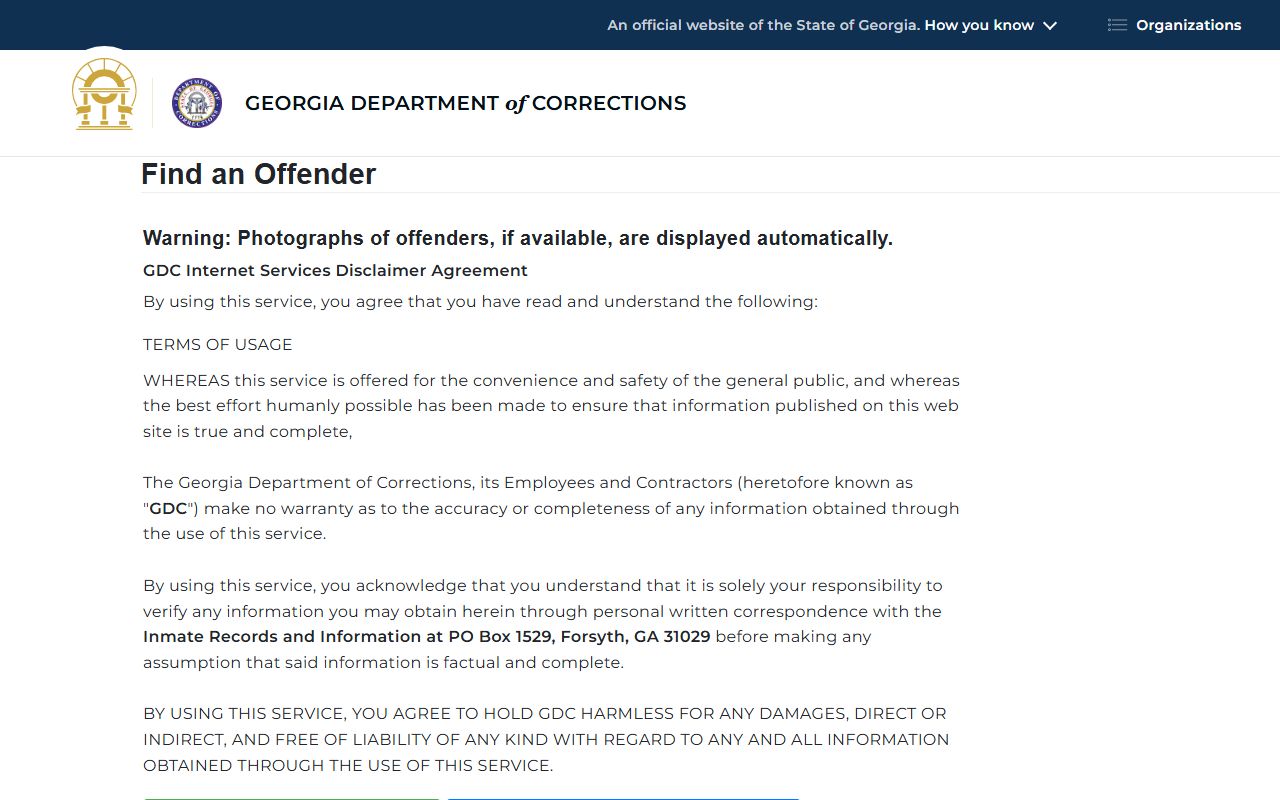
Use the state custody search only after checking whether the person is in local custody, has moved to state custody, or has a conviction history that belongs outside the county jail record.
Taliaferro County Charge Status
Charge status matters because a charge is an allegation until it is resolved by plea, verdict, dismissal, or other court action. The sheriff's criminal-process page describes the grand jury as a body that reviews felony evidence and returns either a true bill or no bill. It also describes plea bargaining as an agreement that may reduce charges, drop charges, or recommend a sentence. Those changes should be read from the court file, not assumed from the first arrest note.
| Status | Meaning | Where to verify |
|---|---|---|
| Pending | The charge has not reached final disposition. | Ask the court holding the case file or check the docket if portal access is available. |
| Amended or reduced | The charge was changed from the first allegation, often through prosecutor review or plea negotiation. | Look for an amended accusation, indictment, order, or plea entry. |
| Dismissed | The court or prosecutor ended that charge without a conviction on that count. | Request the disposition from the clerk for the court that handled the case. |
| Nolle prosequi | The prosecutor chose not to proceed on the charge. | Confirm with the filed criminal case record and any related order. |
| True bill or no bill | The grand jury either returned an indictment or declined to indict. | Check Superior Court records for grand-jury and indictment entries. |
Note: A first arrest charge may be broader, narrower, or different from the charge that appears in the final court disposition.
Taliaferro Charges vs Convictions
A charge is not a conviction. The distinction is central for Taliaferro County arrest records because a person can be arrested, booked, accused, and later have a charge amended, dismissed, no billed, or resolved by a plea to a different count. A conviction requires a guilty plea, a nolo or no-contest plea treated by the court as a conviction where applicable, or a verdict after trial. The final court record controls the result.
| Point of comparison | Charge | Conviction |
|---|---|---|
| Record stage | Allegation after arrest, warrant, accusation, or indictment | Final finding or plea accepted by the court |
| Proof level | May start with probable cause | Requires plea or proof beyond a reasonable doubt at trial |
| Can change | Yes, charges may be added, reduced, amended, dropped, or dismissed | Can be appealed, corrected, or restricted only through proper legal channels |
| Best source | Warrant file, booking note, accusation, indictment, or docket entry | Disposition order, sentence sheet, judgment, or certified court copy |
The official Georgia Bureau of Investigation sex-offender registry service page is a public-safety source, but registry information is not a substitute for the court file that explains the original charge, plea, sentence, or later restriction.
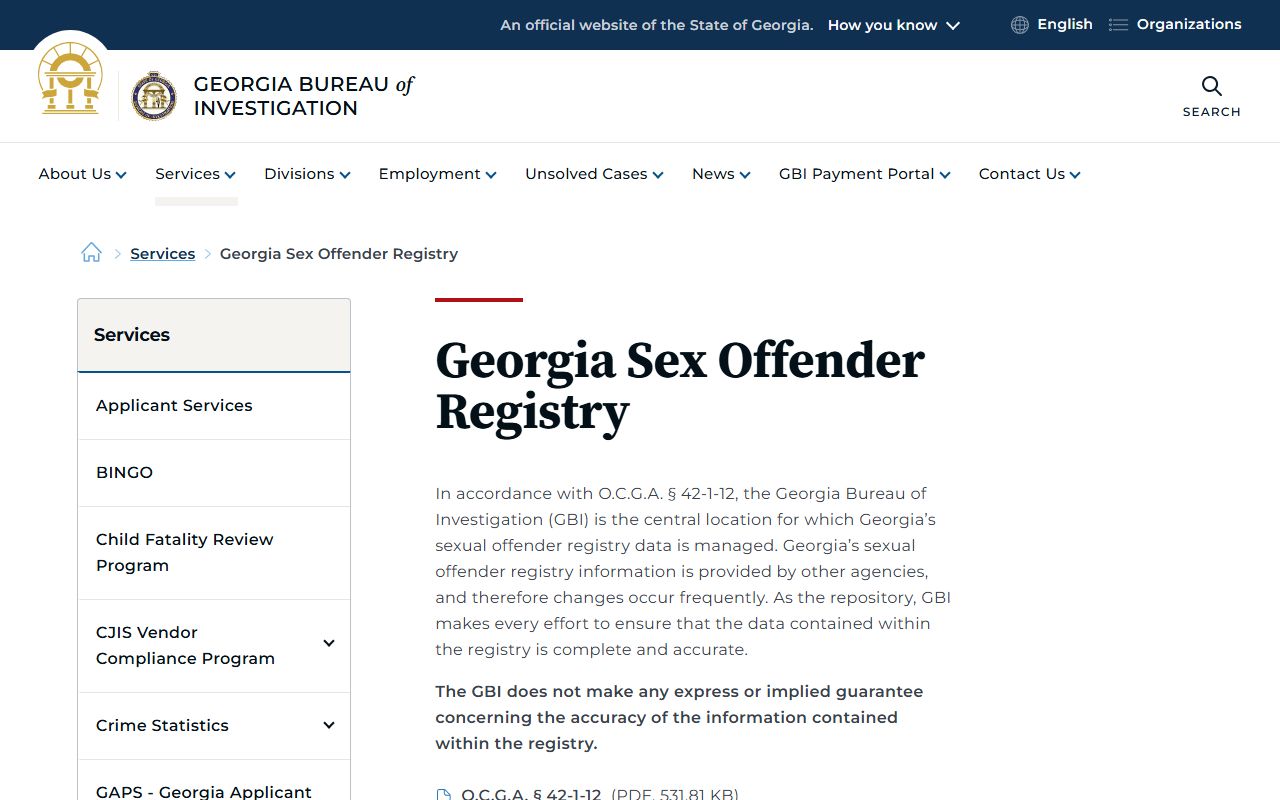
Registry checks should be treated as a separate state public-safety lookup, while Taliaferro County court-charge details should be verified through the court or clerk record.
What Charge Records Show
Georgia court and jail records can contain different fields. The court file may show case number, court name, defendant, filing date, charge, docket entries, arraignment, plea, bond order, disposition, sentence, and appeal entries. The jail side is controlled by separate Georgia jail-record duties. O.C.G.A. 42-4-7 requires the sheriff to keep a record of people committed to the county jail, including name, age, sex, race, process, issuing court, charged crime, commitment date, discharge date, discharge order, and the court issuing that discharge order.
| Field | What it helps prove |
|---|---|
| Charged crime | The offense alleged at arrest, booking, or later court filing. |
| Process and issuing court | Whether the custody came from a warrant, court order, or other process. |
| Docket entries | Hearing dates, arraignment, motions, continuances, plea, sentence, and appeal steps. |
| Charging document | The complaint, accusation, indictment, or warrant count used to move the charge forward. |
| Disposition | The final outcome for each count, if the charge has been resolved. |
Restricted Taliaferro Charge Records
Public access is broad, but it is not absolute. Georgia's Open Records Act, O.C.G.A. 50-18-70 through 50-18-74, generally opens public records unless an exemption, court order, or confidentiality law applies. Court records can also be limited by sealing rules, juvenile confidentiality, redaction, or record-restriction law. O.C.G.A. 35-3-37 is the state criminal-history record restriction statute, and it should not be confused with automatic deletion of every court or jail record.
The GBI registry search may show state registry information when legally required, but it does not replace a certified Taliaferro County charge disposition from the proper court.

When a dismissed or restricted charge still appears in one system, verify the arresting agency, the court disposition, and the state criminal-history route separately.
| Record type | Public access concern | Practical next step |
|---|---|---|
| Juvenile charge | Juvenile matters are often confidential or limited to parties, lawyers, agencies, or court order. | Contact Juvenile Court or the clerk before expecting public access. |
| Dismissed or no-billed charge | The final outcome may differ from the arrest allegation. | Ask for a court disposition and check record-restriction eligibility. |
| Sealed or restricted charge | Public systems may hide all or part of the record. | Follow the court order or statutory process that controls access. |
| Personal identifiers | Social Security numbers, financial-account data, minor names, birth dates, and medical details may be redacted. | Request the public version or ask what proof is required for party access. |